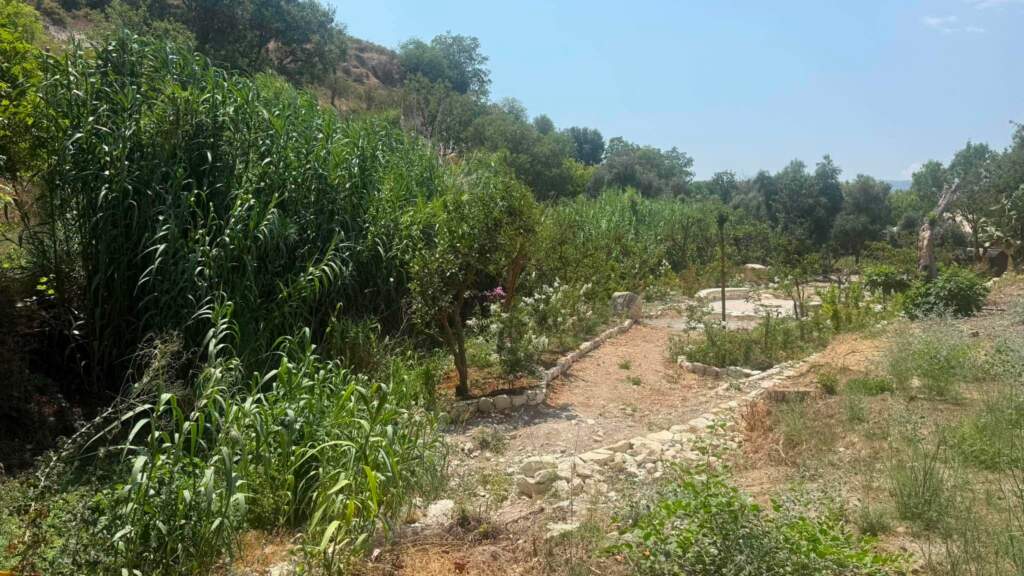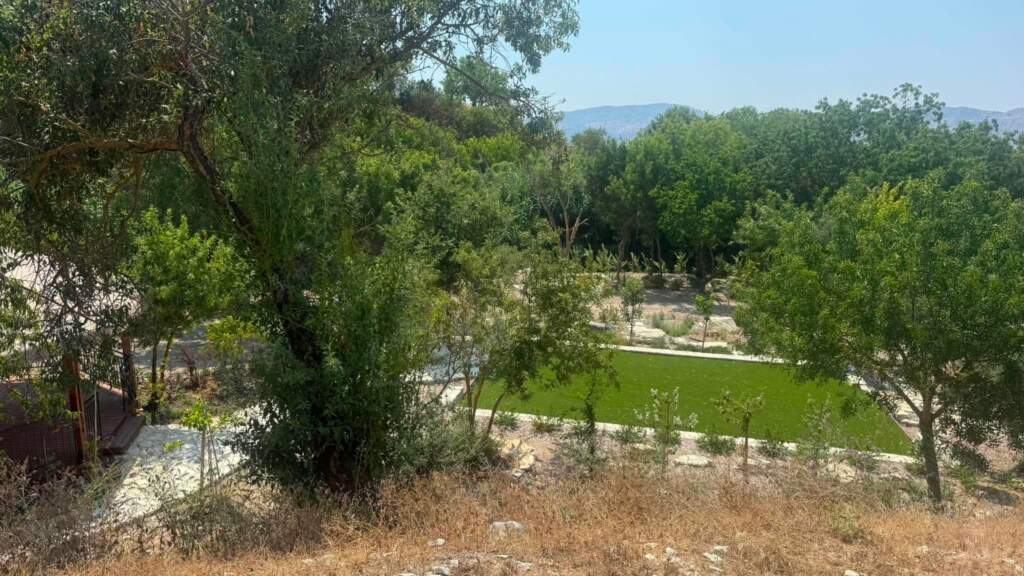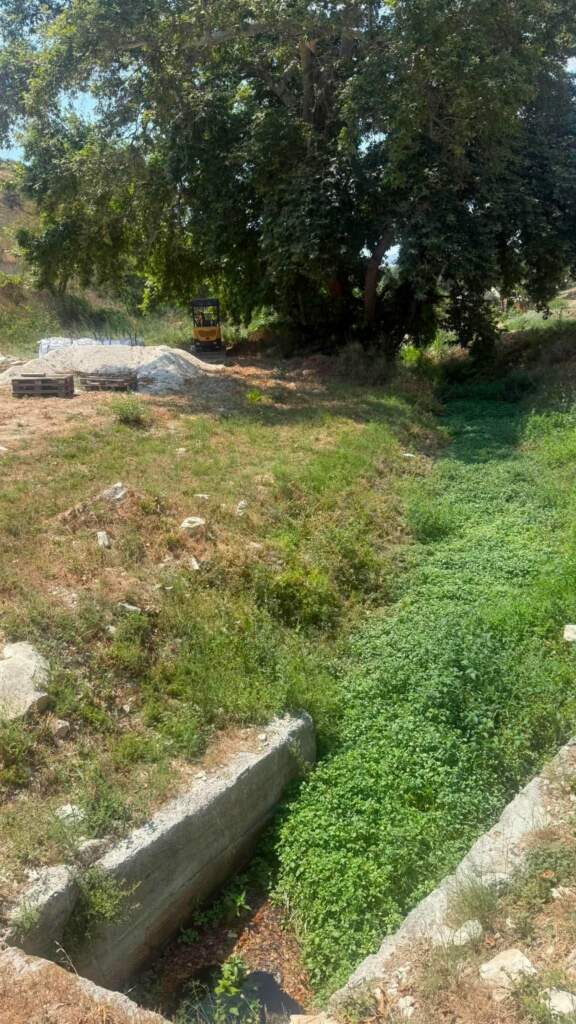



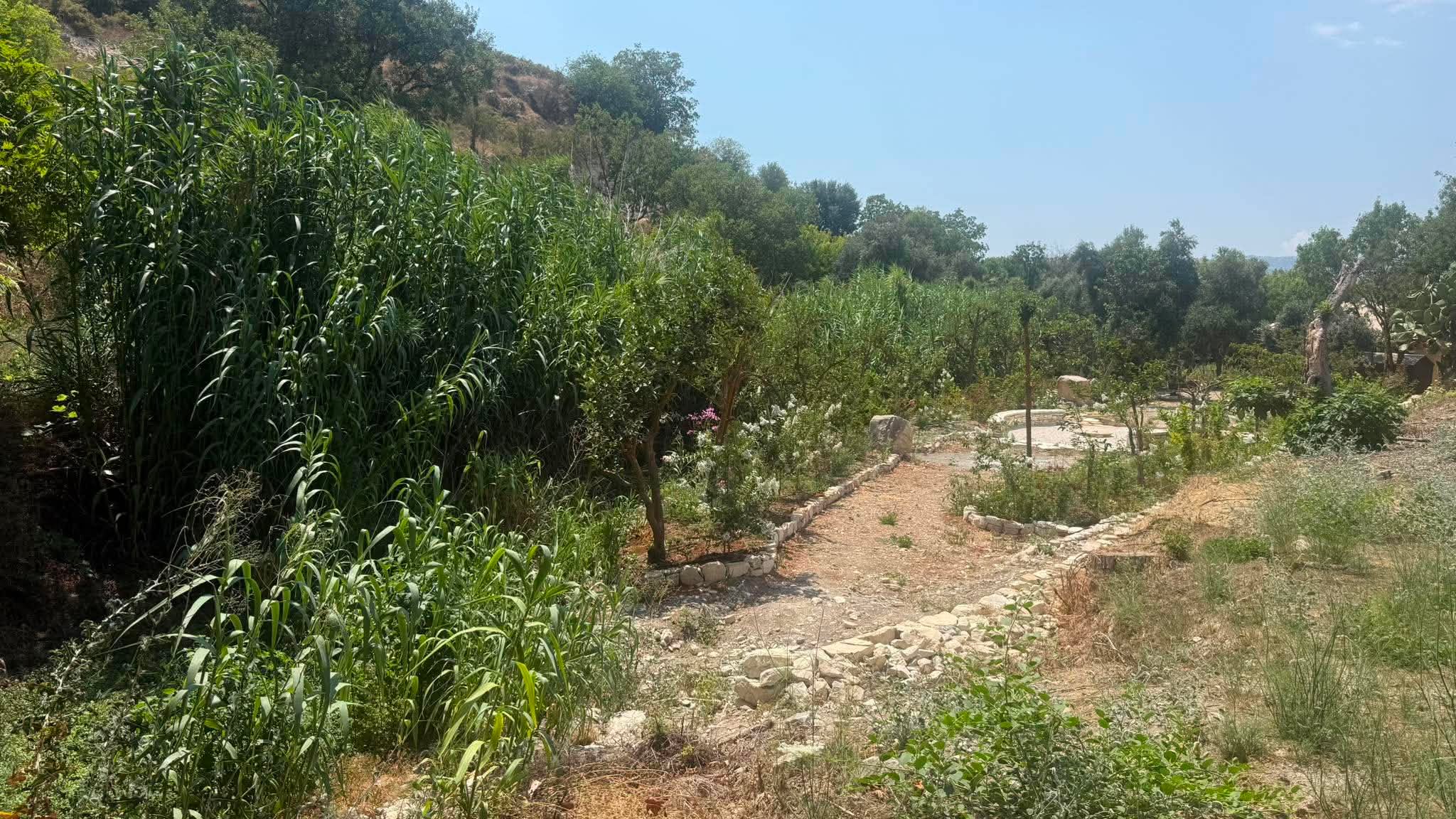
- Works continue unabated in Trozena, within a protected Natura 2000 site, without any environmental approval, planning permit or building permit
- No response from the Environmental Authority to repeated requests for public access to environmental information
- The competent authorities must respect the applicable legislation and established case law of the courts of the European Union and the Republic of Cyprus
Following the confirmation that construction works continue in the abandoned settlement of Trozena, in Limassol District, within the Natura 2000 Special Protection Area (SPA) Cha-Potami and adjacent to the Natura 2000 Special Area of Conservation (SAC) Cha-Potami, Terra Cypria is publicly calling on the Department of Environment to ensure the immediate enforcement of applicable legislation and public access to environmental information.
It is emphasised that the large-scale preparatory (earthworks) and construction (building) works in Trozena are not covered by any environmental approval, planning permit or building permit, while the Environmental Authority has, to date, failed to respond to repeated requests for public access to environmental information. In this framework, Terra Cypria stresses that the competent authorities must respect and enforce the applicable legislation and established case law of the courts of the European Union and the Republic of Cyprus, guided by the need to safeguard the public interest and protect the natural environment.
In August 2025, an Appropriate Assessment Study was submitted regarding the overall Master Plan for the reconstruction and revitalisation of the abandoned settlements of Trozena–Gerovasa. The study was examined at a meeting of the Ad-hoc Committee on Appropriate Assessment held on 10/02/2026, during which the unlawful commencement and execution of large-scale earthworks and construction works was identified. On 12/02/2026, Terra Cypria sent a letter to the Department of Environment requesting the submission of supplementary information. Following the publicity generated by the issue, including relevant social media posts and media reports, Terra Cypria sent a further letter to the Department of Environment on 08/05/2026.
Following a new site visit carried out by Terra Cypria in Trozena on 21/07/2026, it was evident that construction works are still being carried out in the area, both within and outside the plots designated for the proposed project. It is also emphasised that the unauthorised interventions and unlawful works are being carried out entirely within the Natura 2000 SPA Cha-Potami. It is further noted that these unauthorised interventions and unlawful works fall both within a designated Development Limit, specifically Residential Planning Zone H1, and outside the designated Development Limit, specifically Nature Protection Planning Zone Z1, Water Protection Planning Zone Z3, as well as Water Protection Planning Zone and Protected Landscape Planning Status Z3-PT (Trozena–Gerovasa Gorge).
As Terra Cypria received no response from the Environmental Authority to its letters dated 12/02/2026 and 08/05/2026, on 22/07/2026 it sent a further letter requesting information on the following:
- Whether the Department of Environment has taken any measures and/or actions pursuant to the provisions of the Law on Environmental Impact Assessment (EIA) from Certain Projects of 2018 [Law 127(I)/2018] and/or the Law on Environmental Liability regarding the Prevention and Restoration of Environmental Damage Law of 2007 [Law 189(I)/2007].
- Whether the Game and Fauna Service, as the competent authority responsible for the protection and management of Natura 2000 sites designated as SPAs for the conservation of wild birds, has taken any measures and/or actions pursuant to the provisions of the Law on the Protection and Management of Wild Birds and Game Species of 2003 [Law 152(I)/2003].
- Whether the Limassol District Local Government Organisation, as the competent authority responsible for examining applications for planning permits submitted for the proposed reconstruction project of the abandoned settlement in Trozēna, Limassol, has taken any measures and/or actions pursuant to the provisions of the Law on Town Planning and Housing of 1972 [Law 90/1972] and/or the Law on the Regulation of Streets and Buildings (Chapter 96).
- Whether the Department of Environment intends to continue examining the proposed project, taking due account of the relevant case law of the European Court of Justice, the Supreme Court of Cyprus and the Administrative Court of Cyprus, as well as the relevant Opinions of the Law Service of the Republic of Cyprus, dated 23/09/2011, 25/05/2015 and 30/03/2022.
- Whether the Department of Environment has prepared and submitted a relevant statement of facts to the Law Service of the Republic of Cyprus, requesting a legal opinion on the above matters.
It is noted that the request for access to environmental information is based on the provisions of Article 7A(2)(a) of the Constitution of the Republic of Cyprus and the Law regarding the Nineteenth Amendment of the Constitution of 2024 [Law 171(I)/2024], Articles 2(3) and 4(1) of the Aarhus Convention, and the Ratifying Law of 2003 on the Aarhus Convention on Access to Information, Public Participation in Decision-Making and Access to Justice in Environmental Matters [Law 33(III)/2003], as well as Articles 2 and 3(1) of the Access to Environmental Information Held by Public Authorities Law of 2004 [Law 119(I)/2004].
It is further noted that, according to the Judgment of the European Court of Justice dated 03/07/2008 in Case C-215/06, Commission of the European Communities versus Ireland, Member States are required to apply the Environmental Impact Assessment (EIA) Directive “in a manner which fully corresponds its requirements, having regard to its fundamental objective”, namely “that projects likely to have significant effects on the environment, by virtue, inter alia, of their nature, size or location, should be made subject to a requirement of development consent, and an assessment with regard to their effects” (paragraph 49).
In this regard, a system of regularisation regime is not permitted where it “may have the effect of encouraging developers to forgo ascertaining whether intended projects satisfy the criteria” of the EIA Directive and, “consequently, not to undertake the action required for identification of the effects of those projects on the environment and for their prior assessment”. This is necessary so that “the competent authority to take effects on the environment into account at the earliest possible stage in all the technical planning and decision-making processes, the objective being to prevent the creation of pollution or nuisances at source rather than subsequently trying to counteract their effects” (paragraph 58).
According to the Judgment of the European Court of Justice dated 03/03/2011 in Case C-50/09, European Commission versus Ireland, the powers of the Environmental Authority and the Planning Authority in a Member State, as well as “the rules governing their implementation ensuring that an environmental impact assessment is carried out fully and in good time, that is to say before the giving of consent, within the meaning of” the EIA Directive (paragraph 77).
Beyond the above, it is stressed that a project developer cannot, on the one hand, submit an application for a planning permit, accompanied by the relevant EIA and/or Appropriate Assessment studies, while simultaneously proceeding with the unlawful commencement of preparatory (earthworks) and/or building (construction) works.
As stated in the Judgment of the Supreme Court of Cyprus dated 26/07/2011 in Case 528/2009, Cyprus Limni Resorts & Golfcourses Plc versus Republic of Cyprus, “the Applicants’ action in submitting the application for the issuance of the relevant planning permit, without having withdrawn it to date, supports the Respondents’ position that the works in dispute constituted ‘development’ for which the issuance of a planning permit was required under the provisions of the Law. Their action in challenging this finding constitutes subsequent disapproval and is contrary to the principle prohibiting simultaneous approval and disapproval. The Applicants cannot, at their discretion, on the one hand participate in and accept the correctness of a procedure and apply for the issuance of an administrative act and, on the other hand, challenge the existence of the conditions for the application of that procedure when they consider that its outcome is not favourable to them. In my view, the Respondents correctly proceeded with the procedure for issuing an Enforcement Notice pursuant to section 46 of the (Town Planning and Housing) Law, since the Applicants not only consented to it but, through their application, effectively initiated it”.
According to the Judgment of the Administrative Court of Cyprus dated 04/12/2019 in Case 1402/2015, Holy Monastery of Kykkos v Republic of Cyprus, “the applicant is not entitled even to raise allegations concerning the unlawfulness of an act in which it itself participated and which, through its conduct, it accepted as falling within planning law, subsequently and contradictorily seeking a derogation from it, since such conduct constitutes simultaneous approval and disapproval, which is not accepted in administrative law”.
In conclusion, Terra Cypria calls on the Department of Environment to take, without delay, all necessary measures and prescribed actions pursuant to the provisions of the Law on the Environmental Impact Assessment from Certain Projects of 2018 [Law 127(I)/2018] and the Law on Environmental Liability regarding the Prevention and Restoration of Environmental Damage of 2007 [Law 189(I)/2007].
At the same time, Terra Cypria calls on the Game and Fauna Service to take, without delay, all necessary measures and prescribed actions pursuant to the provisions of the Law on the Protection and Management of Wild Birds and Game Species of 2003 [Law 152(I)/2003].
Finally, Terra Cypria calls on the Limassol District Local Government Organisation to take all necessary measures and prescribed actions pursuant to the provisions of the Town Planning and Housing Law of 1972 [Law 90/1972] and the Law on the Regulation of Streets and Buildings (Chapter 96).