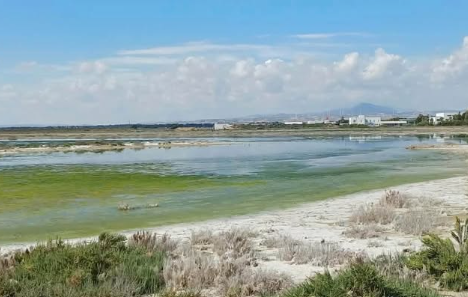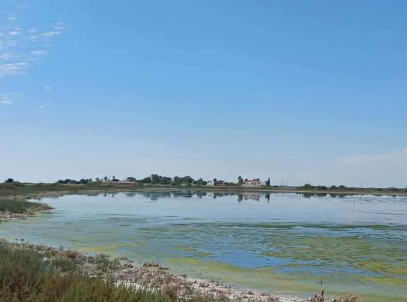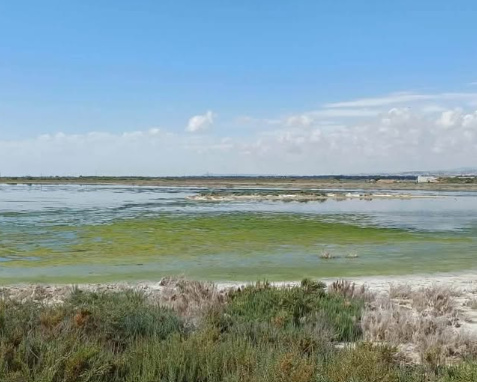
Following a site visit to Larnaca Salt Lake today, we observed a highly concerning phenomenon. Signs of severe eutrophication (excessive algal growth) were detected in one part of the lake, indicating an excessive concentration of nutrients, mainly nitrogen and phosphorus, in the water.
This could be linked to:
- Excessive use of fertilisers that eventually reach the lake.
- Discharge of untreated sewage.
- Discharge of livestock or industrial wastewater.
Eutrophication reduces the amount of oxygen available in the water, affects its quality and clarity, and can lead to the death of aquatic organisms. It also disrupts the balance of the ecosystem and may negatively affect species that depend on the salt lake, including waterbirds.
The location where eutrophication was observed, and its proximity to the Larnaca Wastewater Treatment Plant (WWTP), raises serious questions:
- Is the Larnaca Wastewater Treatment Plant operating properly?
- Is treated wastewater being discharged into the Salt Lake?
- Has any such discharge been authorised by the competent authorities?
- Is the discharged water subject to secondary or tertiary treatment?
‼️ We call on the competent authorities to immediately investigate the situation and take all necessary measures to prevent any further environmental damage to Larnaca Salt Lake.