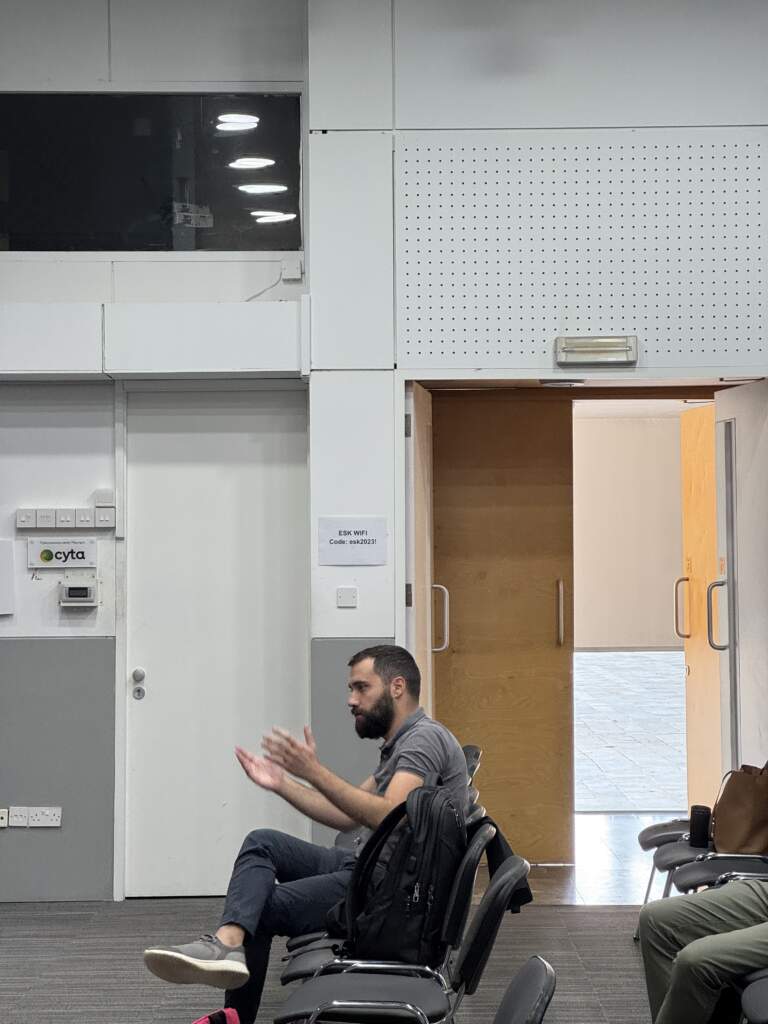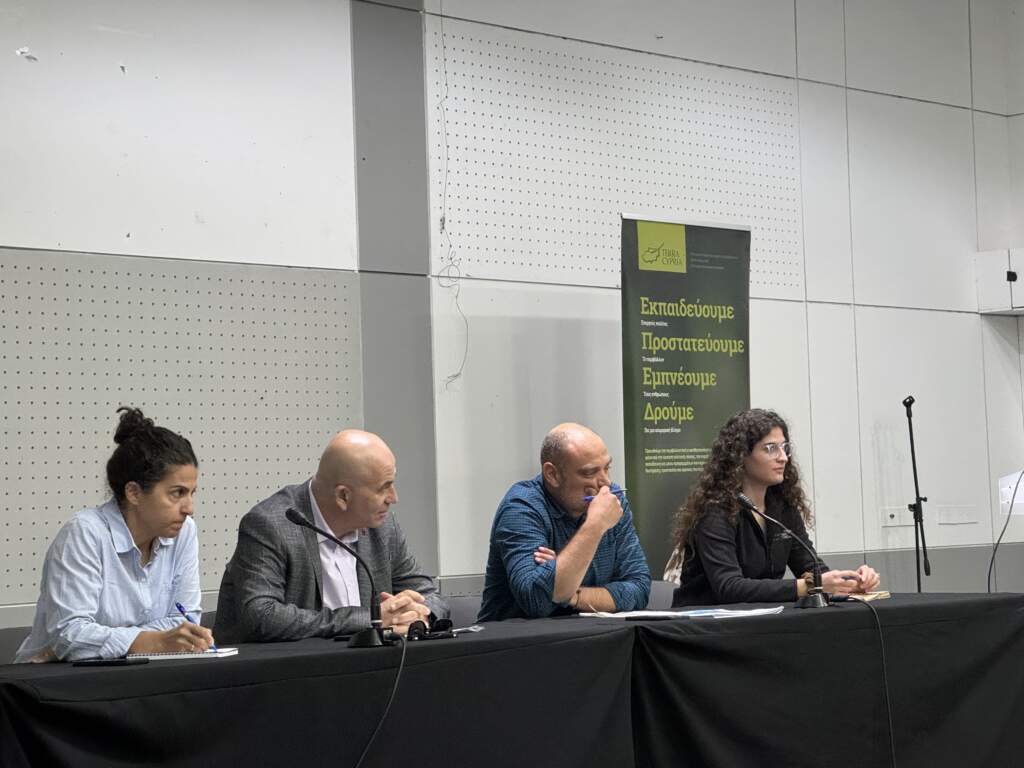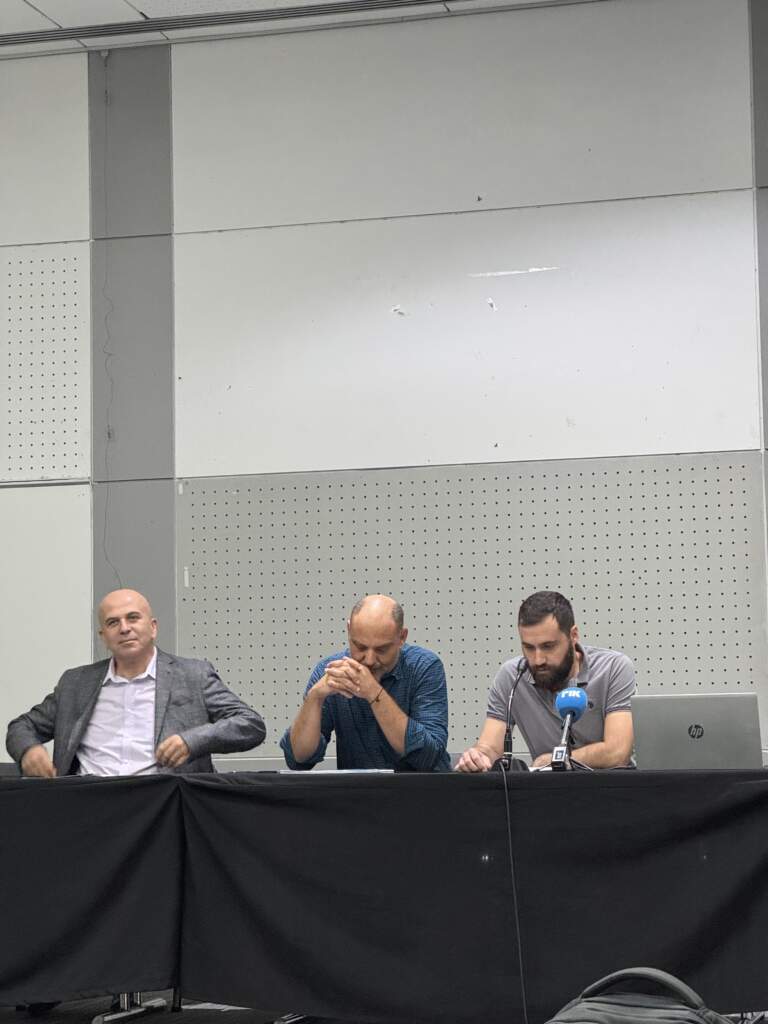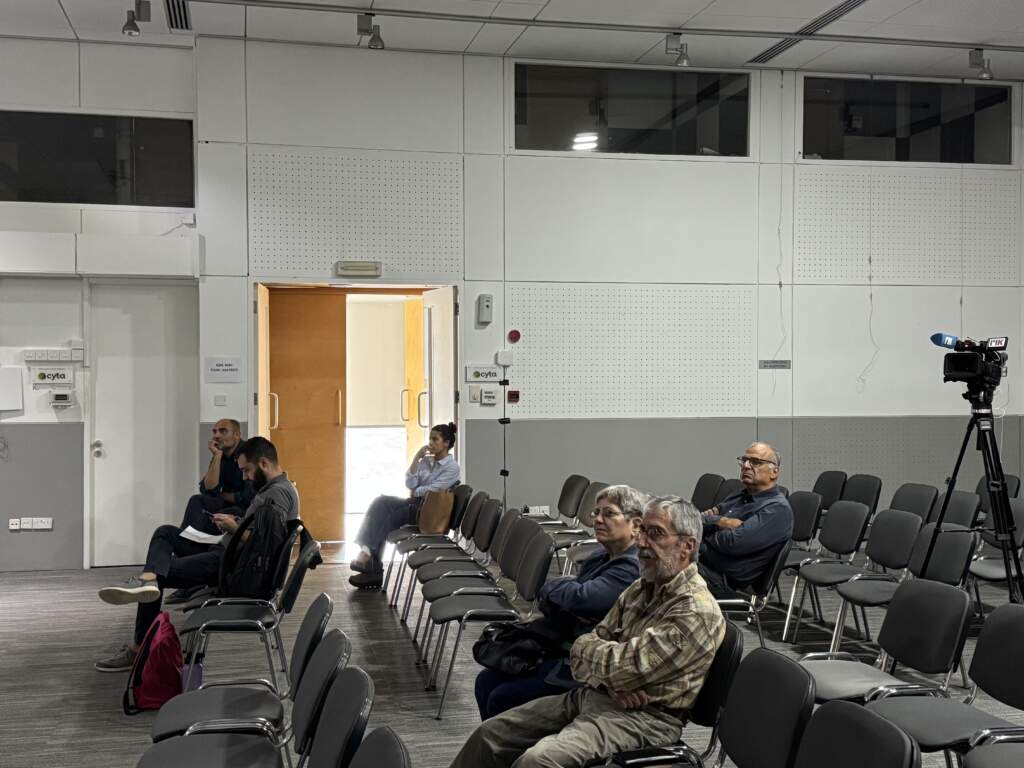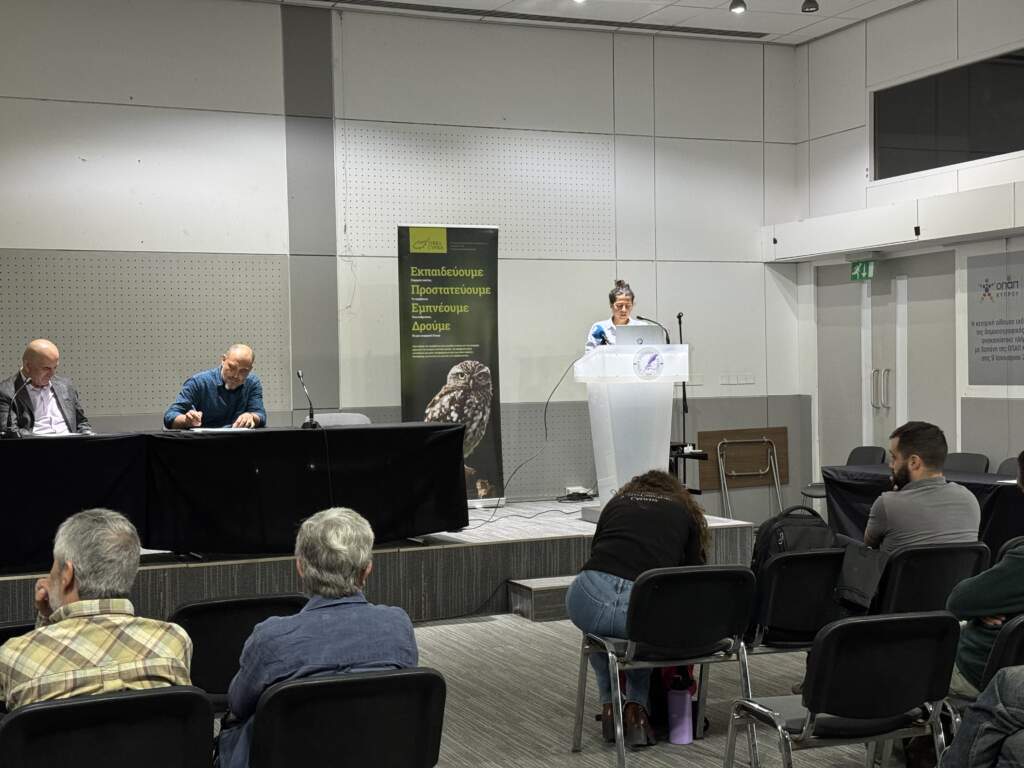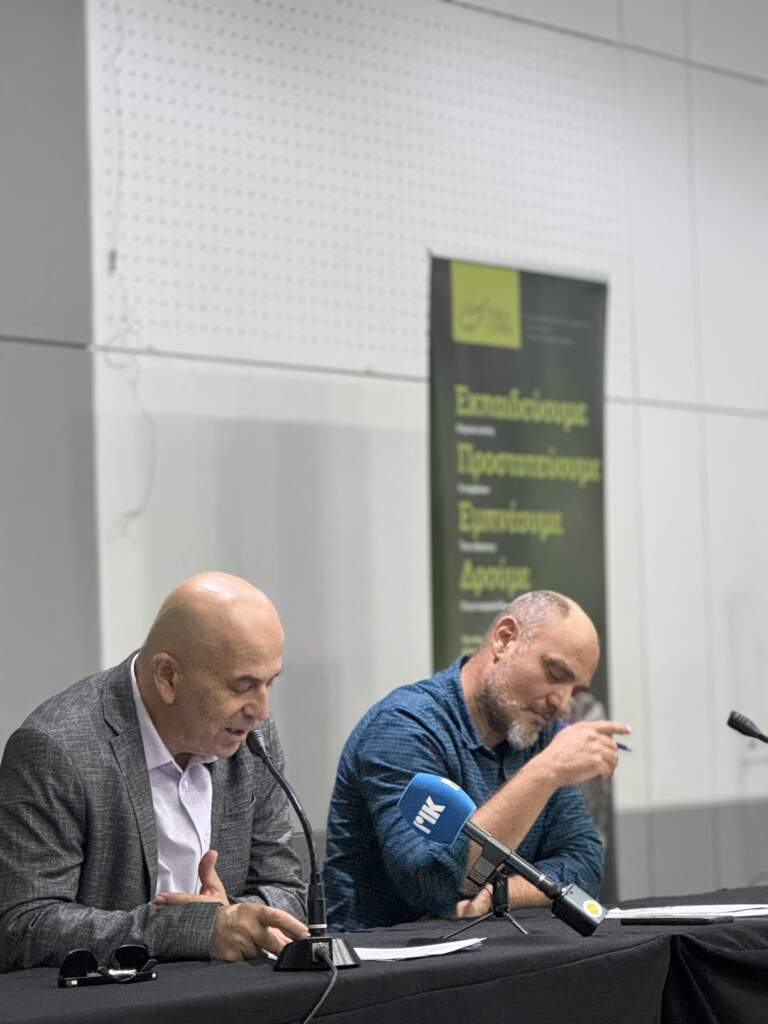



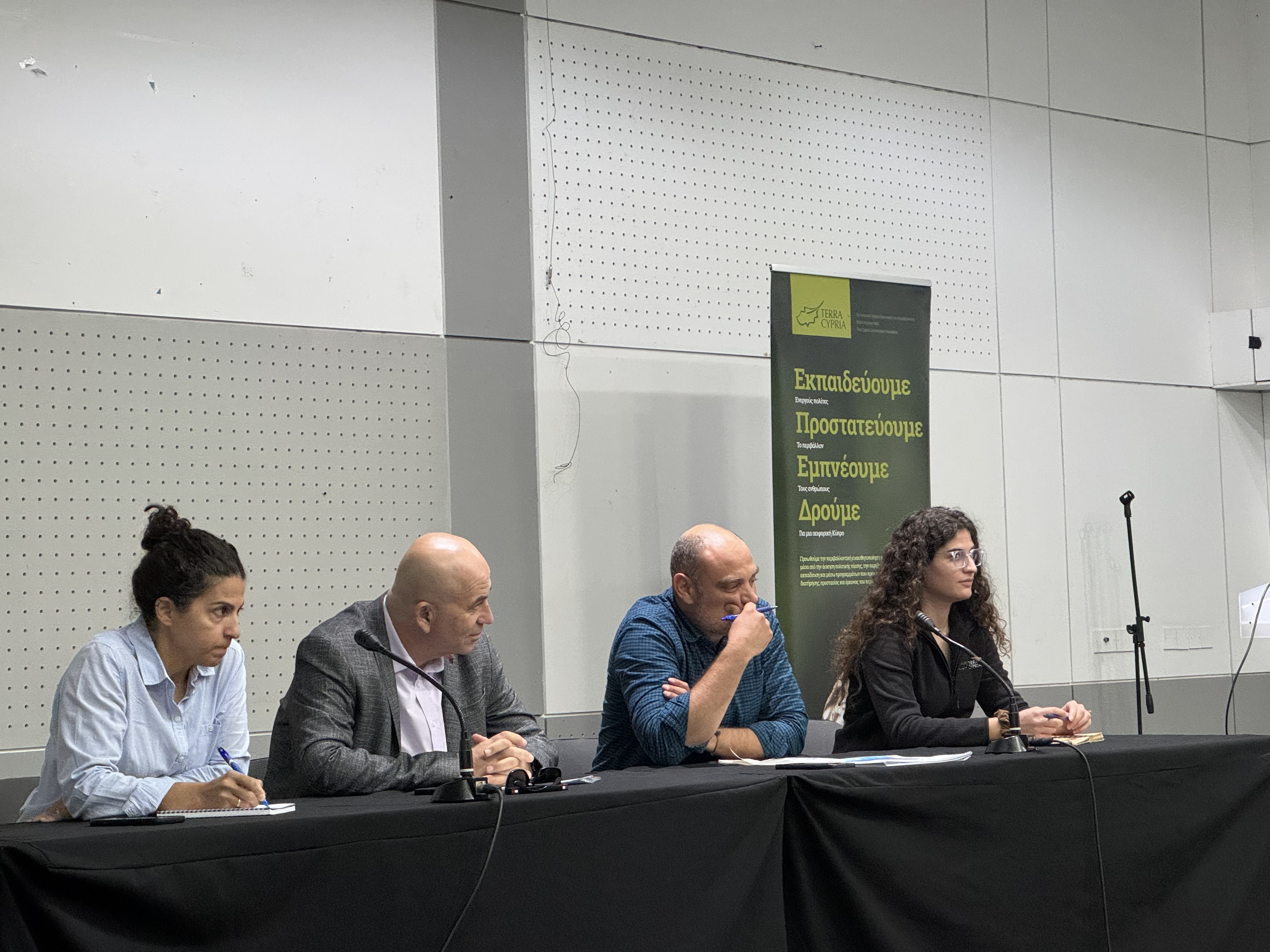
On Monday, November 17th, a workshop titled “Media & Climate: From Information to Participation” was organised by Terra Cypria – The Cyprus Conservation Foundation, with the support of the Cyprus Union of Journalists.
The aim of the workshop was to highlight the role of environmental journalism in informing the public about issues related to climate change.
The event opened with welcome remarks by Mr. Kleitos Papastyliannou, Environmental Policy Officer at our foundation, and Mr. Dimitris Stratis, representing the Cyprus Union of Journalists.
Next, Maria Constantinou, Climate Change Officer at Terra Cypria, provided an overview of the development of the climate change phenomenon and the impacts of the climate crisis, including large and uncontrollable wildfires, decreasing average rainfall and water scarcity, rising temperatures, and intensifying extreme weather events.
She stressed the need for the formulation and implementation of comprehensive and effective mitigation and adaptation measures, including priority actions such as:
- strengthening renewable energy in the country’s energy mix, mainly by utilising existing built surfaces (e.g., rooftops),
- improving energy efficiency in buildings,
- enhancing sustainable and public transport,
- advancing research and innovation,
- ensuring adequate funding and investment in the energy sector,
- implementing policies related to Land Use, Land Use Change and Forestry (LULUCF),
- and addressing key recommendations from the European Commission’s assessment of Cyprus’ National Energy and Climate Plan (NECP).
Dr. Nicoletta Kythreotou, Senior Environment Officer and Head of the Climate Policy Sector at the Department of Environment, provided an overview of the development of long-term climate policies. She emphasised that tackling climate change requires both mitigation (reducing greenhouse gas emissions) and adaptation measures.
Regarding mitigation, she spoke about the EU Emissions Trading System (ETS), which aims to reduce emissions from energy-intensive industries and electricity production. She also referred to Cyprus’ National Energy and Climate Plan, which includes actions across the energy, transport, industry, agriculture/livestock, waste, and land-use sectors, and highlighted the national emissions reduction target of –32% (compared to 2005). However, she noted that this corresponds realistically to about –26.1%, as deeper reductions would be difficult to achieve by 2030 according to the revised NECP.
She also presented the updated National Adaptation Action Plan, which includes 64 actions, involves more than 20 organisations, and sets strategic objectives for the period 2025–2050.
Dr. George Pavlidis, journalist and academic, began his presentation by noting that, unfortunately, Cyprus does not yet have a recognised field of environmental journalism or journalists dedicated exclusively to climate and environmental issues. However, he underlined that environmental journalism is a key pillar of climate communication.
He defined it as the branch of journalism concerned with informing, sensitising, and engaging the public on environmental issues. He presented its historical development—starting in 1940s Canada, where pollution challenges helped shape the field—and explained how it has evolved into a specialised discipline taught at universities abroad.
He stressed that despite pressures from economic interests, political factors, and activist groups, environmental journalism must investigate all sides and reveal the truth with objectivity—for example, in issues such as the depletion of natural resources.
A constructive discussion followed, during which participants had the opportunity to ask questions to the speakers. The event concluded with a light lunch.
We would like to thank the Cyprus Union of Journalists for their support, as well as our speakers for their valuable contributions. Environmental journalism plays a crucial role in informing, raising awareness, and driving action on climate change. Through effective communication, there is significant potential for positive change.
The workshop was held as part of a programme implemented by Terra Cypria and funded by the European Climate Foundation (ECF).